Why This Matters
Featured Resources
 Legislation
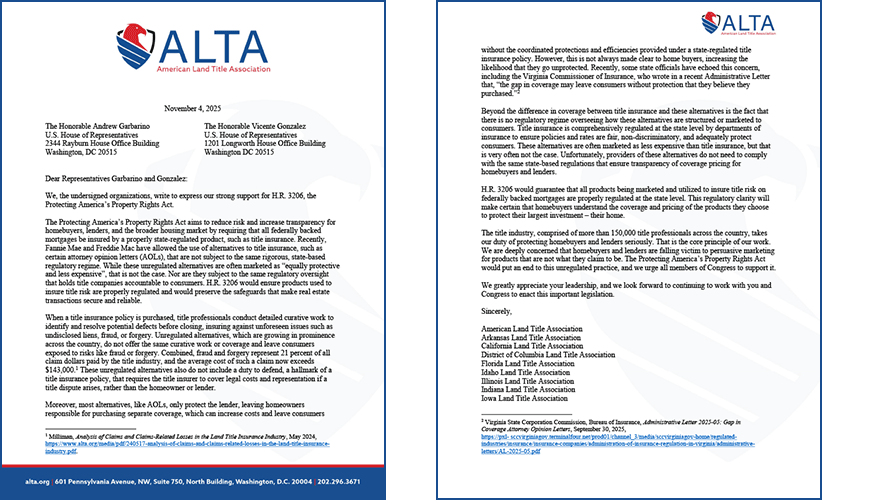
Protecting America's Property Rights Act (H.R. 3206)
The Protecting America’s Property Rights Act would require that all products used to insure title risk on federally backed mortgages be properly regulated at the state level, ensuring consumers understand the coverage and pricing of the products protecting their largest investment. You can find a list of cosponsors here.
 Research
How Title Insurance Protects Property Rights and the U.S. Real Estate Economy
This First American FAQ explains how the title acceptance pilot would remove lender’s title insurance requirements for certain refinance loans, while underscoring why title defects, lien priority and property rights protections remain critical considerations for homeowners, lenders and the broader real estate market.
 Model Resolution
ALEC Resolution Supporting State-Based Title Insurance Regulation
This model resolution from the American Legislative Exchange Council (ALEC) supports state-based title insurance regulation and warns against federal actions that could weaken oversight. It raises concerns about the Title Acceptance Pilot, attorney opinion letters and other alternatives that may shift risk outside the regulated title insurance framework.
Advocacy & Policy

Virginia Bureau of Insurance Letter on Title Insurance Alternatives
This administrative letter warns that attorney opinion letters are being offered as substitutes for title insurance but cannot provide the same protections under Virginia law. It also cautions that some AOL products may cross into the unlicensed business of insurance if they indemnify owners or lenders for title-related losses.
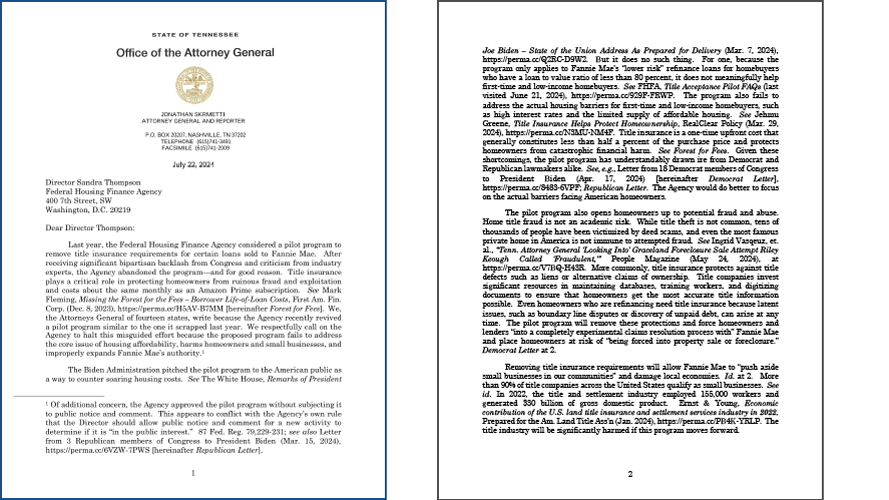
State Attorneys General Letter Opposing FHFA Title Waiver Pilot
This letter from 14 state attorneys general urges FHFA to halt the Title Acceptance Pilot, arguing that it would not meaningfully address housing affordability and could expose homeowners and lenders to greater title risk. The letter also warns that shifting risk away from state-regulated title insurance could weaken consumer protections and harm small businesses in the title industry.
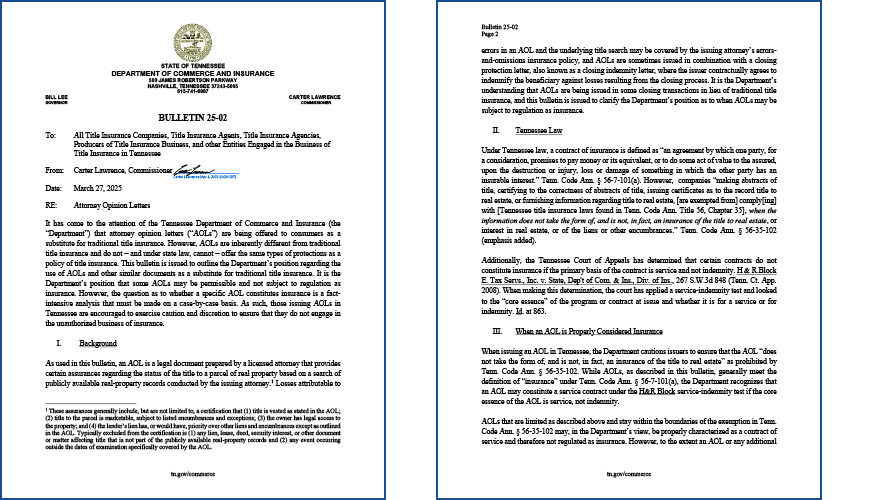
Tennessee Bulletin on Attorney Opinion Letters
This bulletin from the Tennessee Department of Commerce and Insurance explains that attorney opinion letters are different from title insurance and may not offer the same protections. It cautions that some AOLs could be treated as insurance under Tennessee law if they indemnify against title-related losses or function as a substitute for title insurance.
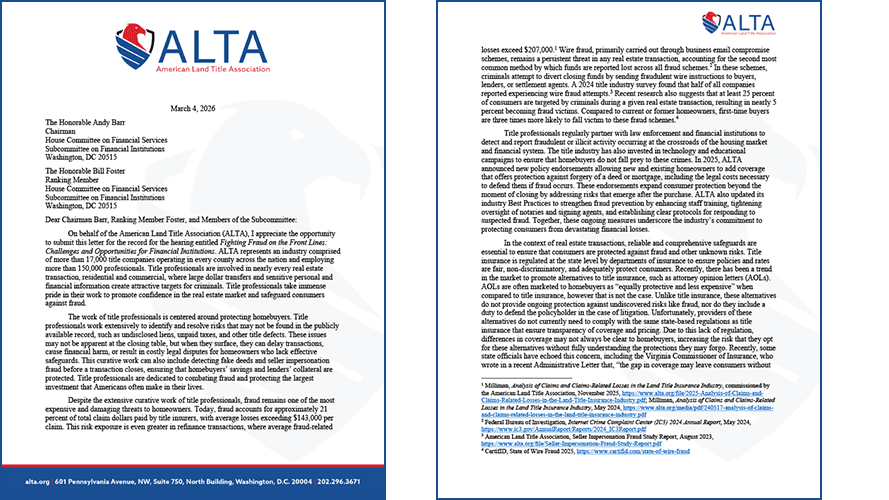
ALTA Letter for HFSC Hearing on Fighting Fraud
ALTA’s letter to the House Financial Services Committee highlights the role title professionals play in fighting real estate fraud and protecting consumers. It also warns that unregulated title insurance alternatives may create coverage gaps and increase risk for homeowners and lenders.

Resources & Tools

Unregulated Title Insurance Alternatives: Risks to Homeowners and Lenders
This resource explains how unregulated title insurance alternatives may expose homeowners and lenders to risks title insurance is designed to cover. It highlights gaps around public records, fraud, legal defense, pricing and regulatory oversight.
Understanding Title Insurance and Its Benefits
This document explains how title insurance protects homeowners and lenders by addressing title defects, fraud, forgery and other risks that may not appear in public records. It also outlines how title professionals support safe closings, perform curative work and provide long-term protection through owner’s and lender’s policies.
News & Insights
Deepfakes, Deed Fraud and the New Risks of Homeownership
ALTA CEO Chris Morton appeared on HousingWire’s Power House podcast to discuss the growing threat of wire fraud, deed fraud, seller impersonation and AI-powered scams, and how those risks ultimately affect homeowners and housing affordability. Morton also discussed Fannie Mae’s title insurance waiver efforts, the significant risks that remain in refinance transactions and the critical work title professionals do behind the scenes to prevent fraud and protect property rights.
Opinion: Congress Should Protect Property Rights, Not Shift Title Risk to Consumers and Lenders
In this op-ed, ALTA CEO Chris Morton urges Congress to pass the Protecting America’s Property Rights Act. Chris warns that weakening title insurance protections or relying on unregulated alternatives could shift hidden legal, fraud and title risks onto consumers, lenders and taxpayers. True housing affordability must include secure property rights and strong, state-regulated safeguards that protect homeowners before and after closing.
Virginia Insurance Commissioner Issues Warning About AOLs
In a letter on Sept. 9, Virginia Commissioner of Insurance Scott White warned consumers and companies offering title insurance alternatives such as attorney opinion letters (AOLs) that these products are prohibited from providing the same or similar protections as title insurance. The bureau advises entities issuing AOLs in Virginia to exercise caution to ensure that they avoid engaging in the business of insurance.
Utah Regulator Revokes Title Company License for Closing Deals With AOLs
The Utah Insurance Department on July 14 revoked the license of a title company for numerous violations, including closing transactions through the UWM Trac Loan program and accepting attorney opinion letters (AOLs) in lieu of lender’s policies.
Attorney Opinions Don’t Count
The federal government continues to push proposals that would dangerously expose lenders and taxpayers to additional risk. In March, the Biden Administration released plans during the State of the Union to revive a previously discredited and shelved pilot program that would waive the requirement for lender’s title insurance on certain refinances.
Title Insurance Matters. Here’s Why.
Without a title insurance policy, homeowners can find themselves fighting for their property over issues they never knew existed. ALTA CEO Diane Tomb shares several examples of how title insurance protects consumers.
18 House Democrats Question Biden Administration’s Title Waiver Program
A group of 18 Democratic members of Congress sent a letter to President Biden expressing concern with the administration’s program that will waive the requirement for lender’s title insurance on certain refinances.
Questions to Consider if Lender Asks You to Close an AOL Deal
Title and settlement agents may see lender customers request a transaction be closed with an attorney opinion letter (AOL) now that Fannie Mae expanded the use of AOLs in limited circumstances for loans on condo properties and those subject to homeowner associations. Read on items you should be considering and questions you should be asking.